There is no single "FinishLine setup." The app is a set of positions that devices can occupy, and which positions you fill is a choice you make per meet, based on how many people showed up and how much the times need to be trusted.
Three shapes cover almost everyone. They are not tiers or upgrade paths. They are different answers to different problems, and it is normal to run more than one of them in the same season. The first shape comes in two versions, and the choice between them has real consequences for how a meet runs.
The shapes at a glance
| Devices | Turnaround | Account | What it replaces | |
|---|---|---|---|---|
| 1a. Lane timers only | 7 to 8 | Fast | ✓ | A bag of stopwatches, paper slips, and Monday's data entry |
| 1b. Lane timers + a start line | 8 to 10 | Fastest | ✓ | The above, plus the clipboard in the chute |
| 2. Accuracy first | 4 to 5 | Slower per heat | ✓ | Renting or borrowing a timing system |
| 3. Solo | 1 | Not applicable | ✗ | Nothing. It is the one you already do, kept properly |
Only the coordinator needs a subscription. Everyone who joins with a join code joins as themselves, with no sign-up, on whatever phone is in their pocket. The solo shape needs no account at all.
The central tradeoff: accuracy costs time
The turnaround column carries the most weight, because it decides whether a shape holds up against a real meet schedule.
More accurate finish capture is slower per heat, and that comes from the nature of the two methods rather than from anything a faster app or a newer phone could fix. A hand-timed lane result is finished the instant the operator taps: the time already exists, and recording it just confirms it. A photo-finish result does not exist yet when the runners cross. The camera has captured the evidence, and someone still has to read it, finding each crossing on the strip and placing a mark on it before there is a time at all.
So the two shapes struggle in opposite ways when you are behind schedule:
- Lane timing turns a heat around in seconds, with six people working at the same time. It gains speed and pays for it in reaction error.
- Photo finish removes the reaction error entirely, and pays for it with a reading step between heats that falls to one person.
Neither is the right answer in general. The right answer depends on how tight your schedule is and how close your finishes are, which is why the last section of this article is about mixing them.
1. Replace the stopwatches and the clipboard
This is the shape most programs start from, because it matches what they already do, position for position. Today a volunteer stands in each lane with a stopwatch, calls a time down the line or writes it on a slip, the slips go in a folder, and somebody types them into a spreadsheet two days later. Every one of those steps stays, except the folder and the spreadsheet.
What actually changes. The volunteer in lane 3 does the same thing they did before: watch the line, press at the torso. The difference is that their device works out the official time itself, measuring from the start of the heat on a clock every device shares, and sends a finished result rather than a number to be read out and transcribed. There is no slip, no folder, and no Monday.
It comes in two versions, and the difference between them is a single decision: whether you put a device at the start. Version 1a is the smaller crew. Version 1b adds one person at the chute, and the extra position makes it the faster of the two rather than the more elaborate one.
1a. Lane timers only
Nobody needs a device at the start for this. Your starter keeps doing exactly what they do now: raise the pistol and fire it. The only positions that need a phone are the ones that were already holding a stopwatch or a clipboard.
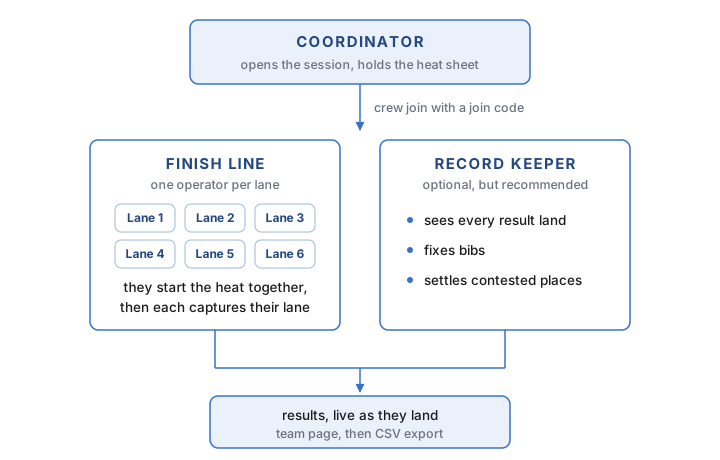
So who starts the clock? The finish crew does, together. With no device claiming the starter position, every lane timer's screen shows a Start button instead of a "waiting to arm" indicator. They each tap it when the gun goes, exactly as they would have thumbed a stopwatch, and the app takes the median of those taps as the official start time for the whole heat.
This is a real improvement on what a bag of stopwatches does. On paper, every watch carries its own operator's reaction, and each lane's time is wrong by a different amount. Taking the median across the crew sets aside the tap that came late and the one that came early, and hands every lane the same start instant. Six independent errors become one shared, much smaller one.
Where the time goes. Someone still has to get each heat out to the crew, and with no start-line device that someone is the coordinator: they load the next heat from the heat sheet and send it to everyone. It works, and for a small meet it is the right amount of setup. But it means heats get built one at a time, between races, by the person who is also running the meet. Every heat costs a little dead air while its lanes are filled in, and nothing else can happen while that is going on.
1b. Add a device at the start, and work ahead
Put one person at the chute in the Starting Line role and the meet stops being one heat after another. Several heats are in motion at once, each at a different stage.
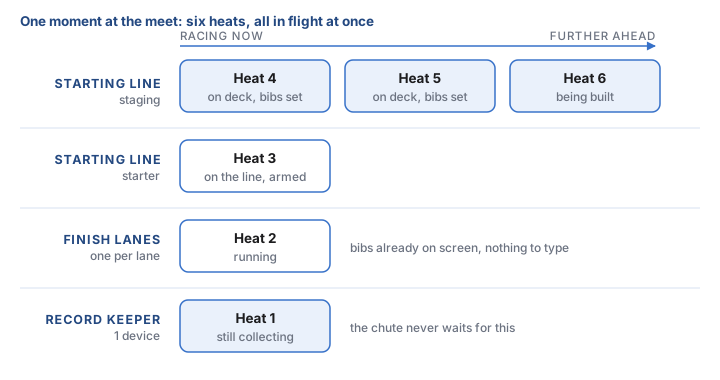
The staging device holds a running list of upcoming heats rather than just the next one. While heat 2 is on the track, heats 4, 5 and 6 are already built, their lanes already filled in, their rosters already sent to the finish crew. The chute works ahead, and the track never waits for it.
Three specific things buy back time, and they are worth separating because they add up:
- Bibs are resolved before the race, not after. Organizing lane-to-bib assignments, photographing a bib that is hard to read, and flagging a duplicate all happen in the chute while the athletes are standing there waiting. By the time the heat is sent off, each lane timer's screen already shows the bib for their lane. The finish operator never types a number: they capture, glance at a pre-filled confirmation, set the place, and record.
- Building the next heat costs nothing, because it already happened. The dead air between heats in 1a disappears, not because anyone works faster but because the work was done earlier, while the track was busy with another race.
- The start line never waits on results. When the starter is done with a heat they advance, which retires it from the chute while it keeps collecting results elsewhere. Heat 1 can still be landing lane times on the record keeper's screen while heat 3 is already on the line.
Because someone is marshalling the chute, this is also the only version where you can safely run two heats at once, which is the biggest single gain in meet speed the app offers and is unmanageable without a person organizing the line.
One device or two, your choice. Staging and firing the gun are two functions on the same Starting Line screen, not two separate roles. One person can flip between them at a small meet, or two devices can split them at a large one, with one operator building heats while the other works the line.
And it is where the acoustic start lives. Once a device is at the start, it can hear the gun and record the real instant instead of relying on the finish crew's median. This is the single best trade in the whole article: a genuine accuracy upgrade that costs zero turnaround time, because nothing has to be read or settled afterward. See how the acoustic start works.
True of both versions
Places still come from a person. In a hand-timed lane heat, places do not come from the clock. The finish-line judge calls them and the lane operator records that call, which is exactly the division of labor a paper meet already has. See the finish timer for why the judge is the better judge of a close finish, and how the record keeper can overrule it either way.
The spreadsheet becomes an export. When the meet ends, results go out as Generic League CSV, Athletic.net / MileSplit, or USATF Junior Olympic, plus any custom format you define. That is the step this shape is really buying back.
The volume down button carries a lot of weight here. It is the stop button, so tell your lane volunteers to rest a thumb on the volume down key and never look at the screen. It is the single largest accuracy difference in this shape, and it costs nothing.
Where this shape wins: speed
This is the fastest way to run a meet, and the mechanics behind that speed are the case for keeping it rather than upgrading everything to photo finish.
The work happens all at once, and it is over when the race is. Six operators each handle one lane at the same moment, and each one's job ends a few seconds after their runner crosses: confirm the bib, set the place, record. There is nothing to read, nothing to settle, and nothing left waiting for later. The heat is closed as soon as the slowest of the six taps Record, and every screen resets for the next heat on its own.
Version 1b goes further, and it does it in exactly the opposite way from what makes photo finish slow. Staging moves work to before the race; marking moves work to after it. Anything you can do while the athletes are still standing in the chute is effectively free, because the track is busy anyway. Anything that has to happen after they cross sits directly between you and the next heat.
For a league meet running thirty or forty heats against a schedule, that matters more than the last tenth of a second of accuracy. A shape that keeps the meet on time is worth a great deal, and this is the shape that does it.
What you pay for that speed is unavoidable: six separate human reactions sitting inside the times at the finish, plus, in 1a, the crew's median reaction at the start. On a heat decided by half a second, that error is invisible. On a heat decided by three hundredths, this shape cannot tell you who won.
2. Build the meet around accuracy
The second shape is for when the times need to hold up: a qualifying meet, a league that publishes standings, or a program tired of a photo-finish argument it cannot settle. It needs fewer people than the first shape, not more.
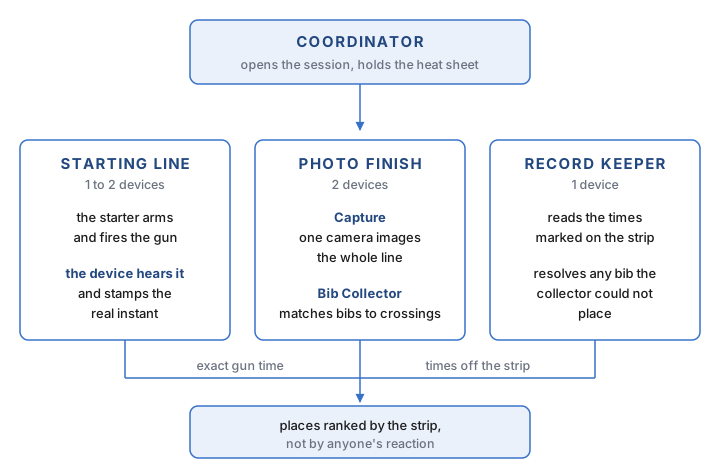
Two human errors get removed, one at each end of the race.
At the start, the starter's device listens for the gun and marks the sound itself, so timing runs from the shot rather than from a thumb pressed after hearing it. Every hand-started time is late by roughly 150 to 250 milliseconds, and this removes that. See how the acoustic start works.
At the line, a single device photographs the finish line continuously and produces a strip you read the crossings off afterward. Nobody is reacting to anything, so nobody's reaction is in the time. Places in a photo-finish heat come from the times read off the strip, because those times are exact enough to rank on. See how the photo finish camera works.
Why it needs fewer people. One photo-finish operator replaces every lane timer at once. Six volunteers become one operator plus a bib collector, and the result is more accurate rather than less. For a short-staffed program this is the shape to reach for, not the fallback.
What this shape costs: the marking step
Fewer people does not mean less work. It means the work moved, and it moved to a place where one person does all of it, one lane at a time, between heats.
After the field crosses, the operator has a strip rather than a set of times. Producing results means scrolling to each crossing on that strip and placing a mark on it, one per lane. Only then do times exist and places get ranked. Two things make this the slowest part of the whole shape:
- The more lanes there are, the longer it takes, and it is one person doing all of them. In the lane shape, six lanes are six people working at the same moment. Here, six lanes are six marks placed one after another by the same operator.
- It gets slower exactly when it matters most. A strung-out field is quick to read. A bunched finish takes real care to sort out, and a bunched finish is exactly the situation you brought the camera for. It costs you the most time on the heats where it is worth the most.
While that is happening the review screen is up, so the device is reading the last heat rather than watching the track. In a meet where heats are sent off quickly, the marking of one heat can still be in progress when the next one is called.
Handing marking to the record keeper
The strip does not have to be read at the finish line. When the photo-finish operator finishes with a heat, the full-quality strip goes up and attaches to that heat, and the record keeper gets a Review button on it: they can open the strip, mark it, and republish the times from their own device. That separates capturing the finish from deciding it, and it is the right move when the finish line is what is holding the meet up.
One thing to weigh before planning around it: this moves the holdup rather than removing it. The record keeper is already the person fixing bibs, settling contested places, and watching results land for the whole meet. Handing them a stack of unread strips piles more one-at-a-time work on the person least able to absorb it. What that buys you is a choice about when the work happens: the finish line stops holding up the track, and the results run behind the meet instead. That is a good trade when results can go out after the last event, and a bad one when you are posting between events or feeding a scoreboard.
A useful middle setting is to mark only what the race actually turned on, usually the win or the one contested lane, and leave the rest of the field for the record keeper. The finish line keeps moving and the interesting call still gets made by the person watching it happen.
A second camera is not a way around it. Photo finish is deliberately a single station: one device is aimed at the line and is the timing source for every lane, so there is never a question about where a time came from. Its second device is the bib collector, not a second reader. So what you can change is where the reading happens, plus the one option below.
What this is not. This is not certified fully automatic timing, and FinishLine does not connect to external timing hardware: no beam, no pressure pad, no wired start sensor. If your sanctioning body requires certified FAT, this shape does not satisfy it. What it does is remove the two largest sources of error in hand timing using equipment you already own. See do I need special timing hardware.
Use it for part of a meet, and the tradeoff mostly disappears. Nothing stops you running lane timers for most of the schedule and photo finish for the events where finishes are actually close. This is the real answer to the time problem rather than a compromise on it: the sprints are where hundredths decide places and are also a small share of your heats, so you spend the reading time only where it changes an outcome. The distance events, where the field arrives strung out and a tenth of a second decides nothing, stay on lane timers and keep the meet moving.
3. One person, one device, no account
The third shape is not a meet at all. It is a coach at practice, a parent in the stands, or an athlete timing themselves, who wants their times kept somewhere better than a note on a phone.
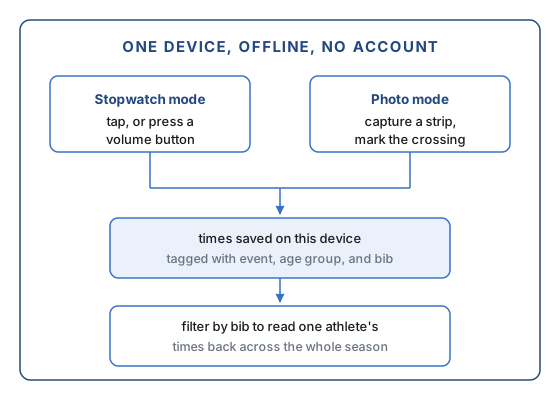
What you get, at no cost and with no sign-up:
- Both ways of timing. Photo finish is not a paid feature. The offline timer can capture a finish strip and mark crossings off it exactly like the connected photo-finish position does.
- The acoustic start, too. The solo timer listens for the gun on its own, which matters because it is usually sitting at the finish while the start happens a hundred meters away.
- Your own events and roster. Build them in Setup and every recorded time carries the event, the age group, and the bib, so the times mean something later.
- A record that accumulates. Times are saved on the device and stay there. Filter the results list by bib and you are reading one athlete's season back, which covers most of what progress tracking is for.
What you do not get. The limits are worth knowing before you plan around it:
- One device, no crew. There is no session to join, so no second phone can contribute to it.
- No publishing. Nothing goes to a team page and no family follows along, because there is no account to attach it to.
- No export. Getting results out as CSV requires a signed-in account and a team you own, so a solo record stays in the app.
- No progress chart. There is no graph, no personal-best badge, and no season summary. The record is a filtered list you read. If a chart is what you actually want, tell us at support@finishlinetimer.com.
- One running list, not separate meets. Solo results pile up in a single list rather than being filed into separate meets the way a coordinated meet's results are.
If you only want to watch, you need even less than this. A parent following results from a team that runs coordinated meets does not need the app at all. That is a browser link, no account, no install. See how families follow results.
Moving between them
Roles belong to devices, not to people, and they are picked when a device joins rather than being fixed for the season. A volunteer who leaves in the middle of the meet hands their position to someone else. A device timing lane 4 early on can be the photo-finish camera later in the day. Nothing about choosing one shape today commits you to it next week.
The practical progression most programs follow:
- Start solo. Time a practice with one phone. It costs nothing and it teaches you the rhythm of timing with the app.
- Run a full meet on lane timers. It is the shape your volunteers already understand, so the only new thing to learn is the app.
- Put a device at the start. The best value of anything on this list, and the only step here that makes the meet both more accurate and faster. Staging works several heats ahead so the chute stops being dead air, and the same device can hear the gun, which costs no turnaround time at all because nothing has to be read or settled afterward.
- Add the camera on the events where finishes are close. Not everywhere, and not all at once. It needs fewer volunteers but more time per heat, so introduce it where that time buys you something and keep lane timers on the rest of the schedule.
Choosing, in one line each
- You have plenty of volunteers, a paper process to kill, and a schedule to keep: lane timing.
- Your meet is already running behind by the third event: lane timing with a start line (1b). The chute is usually what is holding things up, not the finish.
- You are short on volunteers, or the times get published and argued about: accuracy first.
- Both at once, which is most people: lane timing everywhere, photo finish on the sprints, and a device on the gun for all of it.
- It is you, one phone, and a stopwatch you do not trust: solo.
- You just want to see your kid's results: you need a link, not a setup.
Did this answer your question? If something here is wrong, missing, or out of date, tell us at support@finishlinetimer.com and we’ll fix it.